
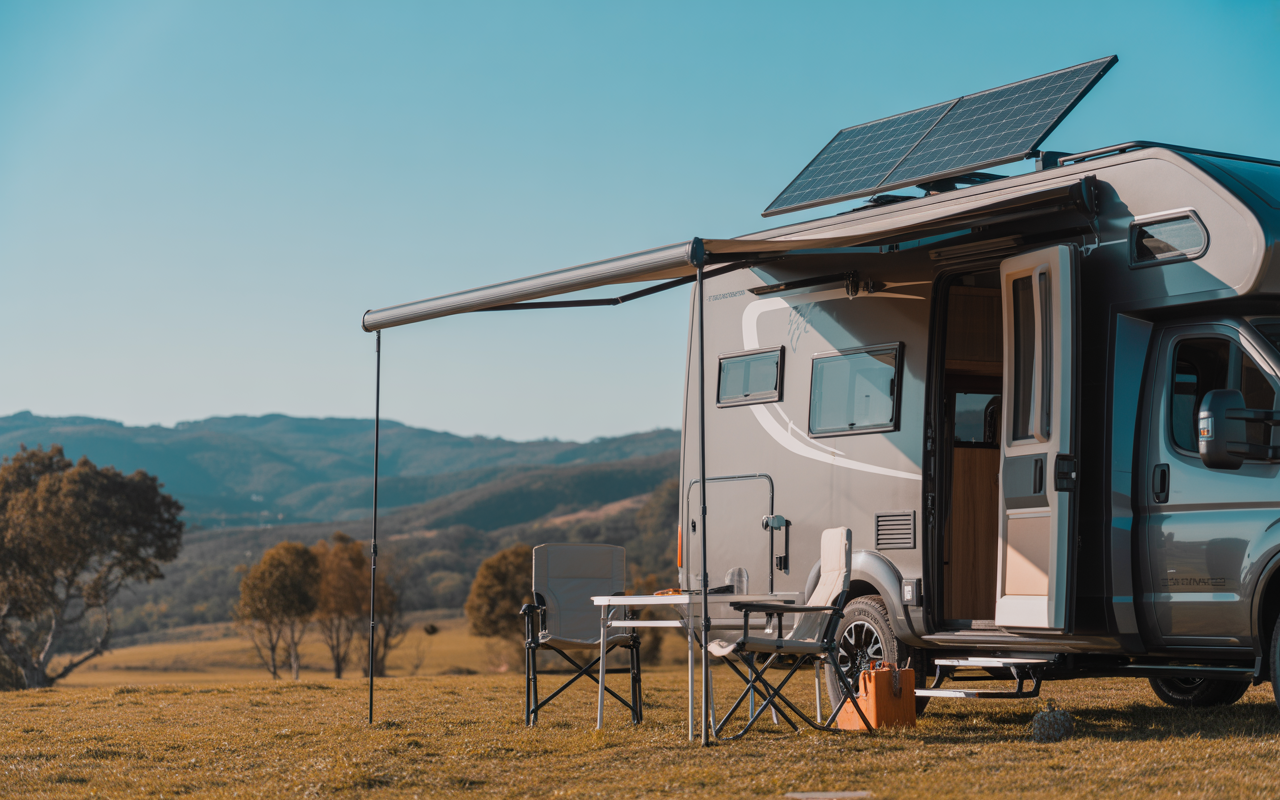
How I Save Money Living in an RV Full-Time (Budget Breakdown)
Living in an RV full-time wasn’t just a lifestyle choice for me; it was a financial strategy. The dream of traveling without the burden of a traditional home’s expenses seemed almost mythical. Now, after several years on the road, I can confirm it’s not only possible but remarkably effective. This post is a transparent breakdown of my budget and the key strategies that allow me to save thousands annually compared to my previous stationary life.
The Core Philosophy: Trading Fixed Costs for Flexible Living
The biggest financial win in RV life comes from fundamentally changing your expense structure. In a traditional house or apartment, you have high, fixed monthly costs: a large mortgage or rent payment, property taxes, homeowners insurance, and often high utility bills. These are obligations you must meet regardless of what you do.
RV living shifts these to variable, often lower costs. Your “housing” cost becomes your RV payment (if financed), insurance, and maintenance. Your “utility” costs are campground fees, fuel, and propane. The magic lies in the control: you can directly influence these variable costs through your choices and mobility.
My Pre-RV Monthly Budget (For Context)
- Mortgage: $1,400
- Utilities (Avg): $300
- Property Taxes (Monthly Avg): $250
- Home Insurance: $100
- Total Fixed Housing Costs: $2,050
This was the baseline just to stay in one place, before groceries, car payments, or anything else.
The Full-Time RV Budget Breakdown
Here is a detailed look at my current average monthly expenses. Remember, these are averages—some months are higher (lots of driving), some are incredibly low (stationary for a while).
H2: Housing & Camping Costs ($500 – $750/month)
This category replaces your mortgage/rent.
Campground Fees ($300 – $600): This is the most variable part.
- Strategy 1: Boondocking/Dispersed Camping. This is camping for free on public lands (BLM, National Forests). It requires a self-contained RV. I aim for 10-15 nights per month boondocking. Cost: $0.
- Strategyт 2: Monthly RV Park Rates. When I want a break or need reliable utilities, I find a park offering a monthly discount. Instead of $40/night, monthly rates can be $400-$600. Average Cost: $500.
- Strategy 3: Volunteer or Workamping. Trading a few hours of work per week for a free campsite. I’ve done this at state parks. Cost: $0 (plus my time).
- Example: Last month, I spent 12 nights boondocking in Arizona, 18 nights at a monthly-rate park in New Mexico. Total camping cost: $520.
RV Payment/Insurance/Maintenance ($200 – $150):
- RV Loan Payment: My used travel trailer was financed. $150/month.
- RV Insurance: Full-time coverage is about $50/month.
- Maintenance Fund: I set aside $100/month into a dedicated fund for repairs, tires, etc. It builds up for when something breaks.
H2: Mobility & Fuel Costs ($250 – $400/month)
This replaces part of your “transportation” budget and is tied to your lifestyle.
Fuel ($200 – $350): This depends entirely on travel density.
- Strategy: The “Slow Travel” Mentality. I plan routes to minimize unnecessary mileage. I stay in regions for weeks or months. Driving 100 miles every other week is vastly cheaper than 1,000 miles every week.
- Example: A month exploring one state might cost $220 in diesel. A month moving cross-country could cost $500+.
Vehicle Insurance & Maintenance ($50):
- My truck insurance remains, and I include it here with the RV maintenance fund for truck-specific repairs.
H2: Living Expenses (Utilities, Food, Phone) ($400 – $500/month)
Utilities ($30 – $100): This is a dramatic reduction.
- Propane: For cooking and sometimes heat. ~$20/month.
- Campground Electricity/Water: Often included in the fee. When boondocking, my solar panels provide free power, and I conserve water from my tanks.
- Example: My average utility cost is $40—mostly propane and occasional laundry.
Food ($300): Similar to a stationary budget, though I shop more carefully to optimize storage. I don’t eat out frequently.
Cell Phone & Internet ($70): Critical for navigation, work, and finding campsites. I have an unlimited data plan and a cell signal booster for remote areas.
H2: Personal & Miscellaneous ($200/month)
This includes health insurance, subscriptions, entertainment, and a small “fun” fund.
My Average Total Monthly RV Living Cost: $1,350 – $1,850
Compared to my previous fixed housing cost of $2,050, I am already saving $200 – $700 per month just on housing, and I gain the freedom to travel. The total lifestyle cost is often lower than my old static housing cost alone.
Key Money-Saving Strategies in Action
Beyond the budget categories, these tactics are the engine of my financial savings.
H3: Embracing Boondocking and Public Lands
This is the number one saver. The U.S. has millions of acres of public land where you can camp free for up to 14 days (often longer in some areas). Learning how to find these spots (using apps like Campendium and iOverlander) and managing your power/water is essential. It turns “housing” into an adventure with a $0 price tag.
H3: The Power of the Monthly Rate
When you need a break from boondocking, seek out RV parks that offer monthly discounts. Paying $600 for a month versus $40/night ($1,200 for 30 nights) is a 50% savings. It also gives you a stable base to explore a region without daily moving costs.
H3: Minimizing Fuel Consumption
Fuel is a major variable cost.
- Plan Cluster Moves: Instead of A -> B -> C -> D in a week, I do A -> B, stay two weeks, then B -> C, stay three weeks.
- Lighten Your Load: Less weight means better fuel economy.
- Drive Slower: On highways, a few mph slower can make a noticeable difference in an RV.
H3: DIY Maintenance and a Proactive Fund
RV repairs can be costly. I’ve learned basic maintenance: sealing roofs, checking plumbing, tire care. The $100/month maintenance fund isn’t an expense—it’s an investment that prevents financial catastrophe when a major issue arises. It’s my “RV emergency fund.”
H3: Simplifying and Downsizing “Stuff”
Living in a small space naturally curbs consumption. You can’t buy unnecessary items because you have no room. This mindset extends to services and subscriptions. I audit my spending constantly, asking, “Does this add value to my mobile life?”
The Numbers: A Comparative Snapshot
| Expense Category | Previous Static Life (Monthly) | Full-Time RV Life (Monthly Avg) | Notes |
|---|---|---|---|
| Housing | $2,050 | $500 – $750 | Massive reduction; becomes variable & controllable. |
| Utilities | $300 | $30 – $100 | Solar & conservation slash these costs. |
| Transport | $250 (car) | $250 – $400 (Fuel + Vehicle) | Merged with lifestyle mobility; controllable via slow travel. |
| Total Core | $2,600 | $1,150 – $1,650 | Potential Monthly Savings: $950 – $1,450 |
This snapshot excludes food and personal costs, which remain relatively constant, to highlight the direct swaps.
Conclusion: Freedom, Both Geographic and Financial
Full-time RV living isn’t cheap—it requires upfront investment, discipline, and a willingness to adapt. But it is far less expensive than a traditional lifestyle for many people. The savings come from a radical rethinking of what “home” costs entail. You trade fixed, high overhead for variable, controllable expenses. By mastering strategies like boondocking, slow travel, and proactive budgeting, you can not only see the country but also build a healthier financial picture. For me, the open road offers both scenic vistas and a clearer path to financial stability.