
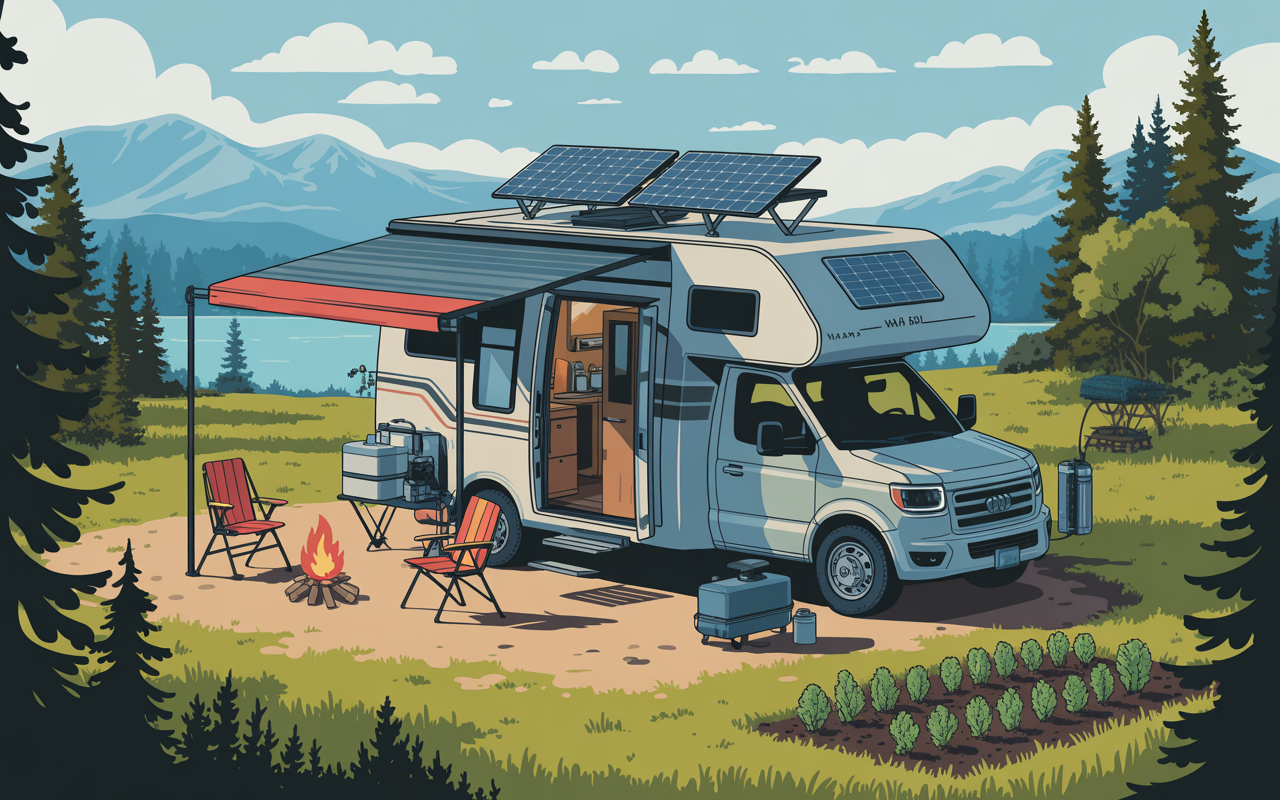
Boondocking for Beginners: How to Live Off-Grid in Your RV
Imagine waking up to a panoramic view of a desert sunrise, the silence broken only by birdsong, with no campground neighbors in sight. This isn’t just a vacation fantasy; it’s a regular Tuesday for RVers who practice boondocking—the art of camping in your RV without any hookups to water, sewer, or electrical grid.
Also known as dry camping or dispersed camping, boondocking is about self-sufficiency. It means relying on your RV’s internal systems and the resources you bring with you to live comfortably off the beaten path. For beginners, the idea can be intimidating, but with the right knowledge and preparation, it opens up a world of freedom, stunning natural locations, and significant cost savings. This guide will walk you through the essentials to start your off-grid RV journey.
What Exactly is Boondocking?
At its core, boondocking is any form of RV camping without connections to external utilities. While often associated with remote public lands, it can also encompass staying overnight in a parking lot (often called “moochdocking” or “parking lot surfing” with permission). For the purposes of this guide, we’re focusing on the recreational, off-grid camping experience.
Key characteristics of boondocking include:
- No Hookups: No city water, sewer (dump station), or electrical power (shore power).
- Self-Contained Living: You operate entirely on your RV’s freshwater tank, battery bank, and propane supply.
- Location Variety: This includes Bureau of Land Management (BLM) land, National Forests, Wildlife Management Areas, and some state-owned lands that allow dispersed camping.
Why Try Boondocking?
The benefits are compelling:
- Freedom and Solitude: Escape crowded, often noisy campgrounds and choose your own scenic “driveway.”
- Cost: It’s incredibly inexpensive or often completely free. Many public lands allow stays of up to 14 days for no fee.
- Adventure: It gets you closer to nature and into areas that traditional RVs never see.
- Self-Reliance: There’s a profound satisfaction in successfully managing your own resources.
Getting Started: Essential Gear and Preparation
You don’t need a $500,000 rig to start boondocking. You need a well-thought-out setup and a mindset geared toward conservation.
1. The Foundational Systems: Power, Water, and Waste
Your success hinges on managing these three core resources.
A. Power Generation and Storage
Electricity runs your lights, water pump, fan, and potentially your fridge and electronics. The grid is gone, so you must generate and store your own.
- Batteries: Upgrade from a single starter battery to a deep-cycle battery bank. Lithium (LiFePO4) batteries are the gold standard, they’re lighter, last longer, can be discharged more deeply, and charge faster than traditional lead-acid, but they come at a higher upfront cost.
- Solar Power: A solar panel system is the quintessential boondocking upgrade. It quietly recharges your batteries during the day. A 200-400 watt system is a great starting point for most rigs to cover basic needs.
- Alternate Charging: A inverter generator (like those from Honda or Champion) is a reliable backup. It’s quieter than a standard generator and provides clean power for sensitive electronics. Your vehicle’s alternator can also provide a charge while driving between sites.
B. Fresh Water Management
You arrive with a finite supply. A typical RV holds 20-60 gallons.
- Conservation is Key: Take “Navy showers” (wet down, turn water off, soap up, rinse quickly). Use biodegradable soap and wash dishes in a basin. Use hand sanitizer.
- Carry Extra: Portable water jugs (like 5-7 gallon Aquatainers) allow you to bring a reserve without needing to move your entire rig.
- Filtration: Have a quality water filter for when you refill from unknown sources.
C. Waste Handling: Gray and Black Water
Your holding tanks have limited capacity. The black tank holds toilet waste; the gray tank holds water from sinks and shower.
- Maximize Tank Space: Use biodegradable, RV-safe toilet paper. In the shower, let the water run into a basin in the drain to minimize gray water use. Never let grease go down the sink.
- The Disposal Plan: Know where the nearest dump station is before you head out. Apps like Campendium and iOverlander show locations. You’ll need to break camp to dump.
2. Finding the Perfect Spot
You can’t just park anywhere. Legal and responsible site selection is crucial.
Where to Look:
- Public Lands: In the Western U.S., the Bureau of Land Management (BLM) and U.S. Forest Service (USFS) offer vast tracts of land where dispersed camping is permitted, often for up to 14 days within a 28-day period. Always check the specific district’s rules online or at a ranger station.
- Apps and Resources: Campendium, iOverlander, FreeRoam, and the US Public Lands App are invaluable. They show boundaries, user reviews, and photos.
- The 72-Hour Rule: Many Walmarts, Cracker Barrels, and truck stops allow overnight parking for RVs. Always call the specific store manager to confirm. This is less “recreational boondocking” and more a convenient travel stop.
Site Selection Etiquette:
- Stay on Durable Surfaces: Use existing pull-offs or cleared areas. Don’t drive over vegetation.
- Respect Distance: Stay at least 200-300 feet from any water source to protect riparian areas.
- Leave No Trace: Your goal is to leave the site looking as if you were never there. Pack out all trash.
Mastering the Boondocking Lifestyle: Tips and Tricks
With your rig prepared and your spot found, these daily practices will extend your stay and enhance your comfort.
Conservation in Action: A Day in the Life
- Power: Do energy-intensive tasks (using a blender, hair dryer, vacuum) during peak solar hours or while your generator is running. Use LED lights. Unplug phantom loads (inverters, chargers) when not in use.
- Water: Cook one-pot meals to minimize dishwashing. Keep a spray bottle of water by the sink for rinsing. Collect the cold water that runs before the shower gets hot in a jug for other uses.
- Climate Control: Your HVAC is a huge power drain. Instead, use passive methods. Park with your windshield facing east to minimize afternoon sun. Use reflectix in your windows. Maximize ventilation with roof and window fans. Your propane furnace is efficient for short bursts of heat, but a portable propane heater (like a Mr. Heater Buddy, used with extreme caution and proper ventilation) can be a game-changer for chilly nights.
Staying Safe and Connected
- Let Someone Know: Always share your planned location and expected return date with a friend or family member.
- Communication: Cell service is often weak or nonexistent. Consider a cellular signal booster (WeBoost is a popular brand) and a satellite communicator (like a Garmin inReach or Zoleo) for true emergencies in remote areas.
- Self-Defense & Wildlife: Be aware of your surroundings. Keep a flashlight and bear spray accessible if in relevant territory. Secure your food to avoid attracting animals.
The Golden Rule: Leave No Trace
Boondocking is a privilege. Preserving it for others is our collective responsibility.
- Pack It In, Pack It Out: This includes all trash, even biodegradable items like fruit peels.
- Dump Wisely: Only dump tanks at designated sanitary stations. Never dump gray water on the ground—even if it’s “just soap.” It concentrates waste and alters the ecosystem.
- Minimize Impact: Avoid trenching, cutting trees, or building new fire rings. Use a camp stove instead of a fire when possible.
Common Beginner Mistakes to Avoid
- Overestimating Resources: Thinking “40 gallons of water is a lot!” until you’re three days in and half is gone. Always track your usage closely on your first few trips.
- Underestimating Power Needs: Running a residential coffee maker or air conditioner off batteries will flatten them in minutes. Know your appliances’ power draws (in watts or amps).
- Not Having a Plan B: Weather changes, equipment fails. Always know how you’ll exit if needed and have a backup location in mind.
- Ignoring Rig Limitations: A massive 40-foot Class A might struggle on narrow, rutted forest roads. Know your RV’s clearance, length, and weight limits.
- Forgetting the Small Stuff: Extra fuses, a basic tool kit, tire repair kit, and leveling blocks are not optional.
Conclusion
Boondocking is more than a style of camping; it’s a journey toward simplicity and self-reliance. It challenges you to be mindful of your consumption, to plan ahead, and to truly engage with the natural world. The initial learning curve is part of the adventure, and each trip will make you more proficient.
Start small. Plan a 2-3 night trip not too far from a town or dump station. Test your systems, learn your rhythms, and make your mistakes in a low-stakes environment. Before long, you’ll be confidently venturing further, staying longer, and experiencing the profound freedom that comes from knowing your home-on-wheels can take you almost anywhere. The open road, and the untouched lands beyond it are waiting.