
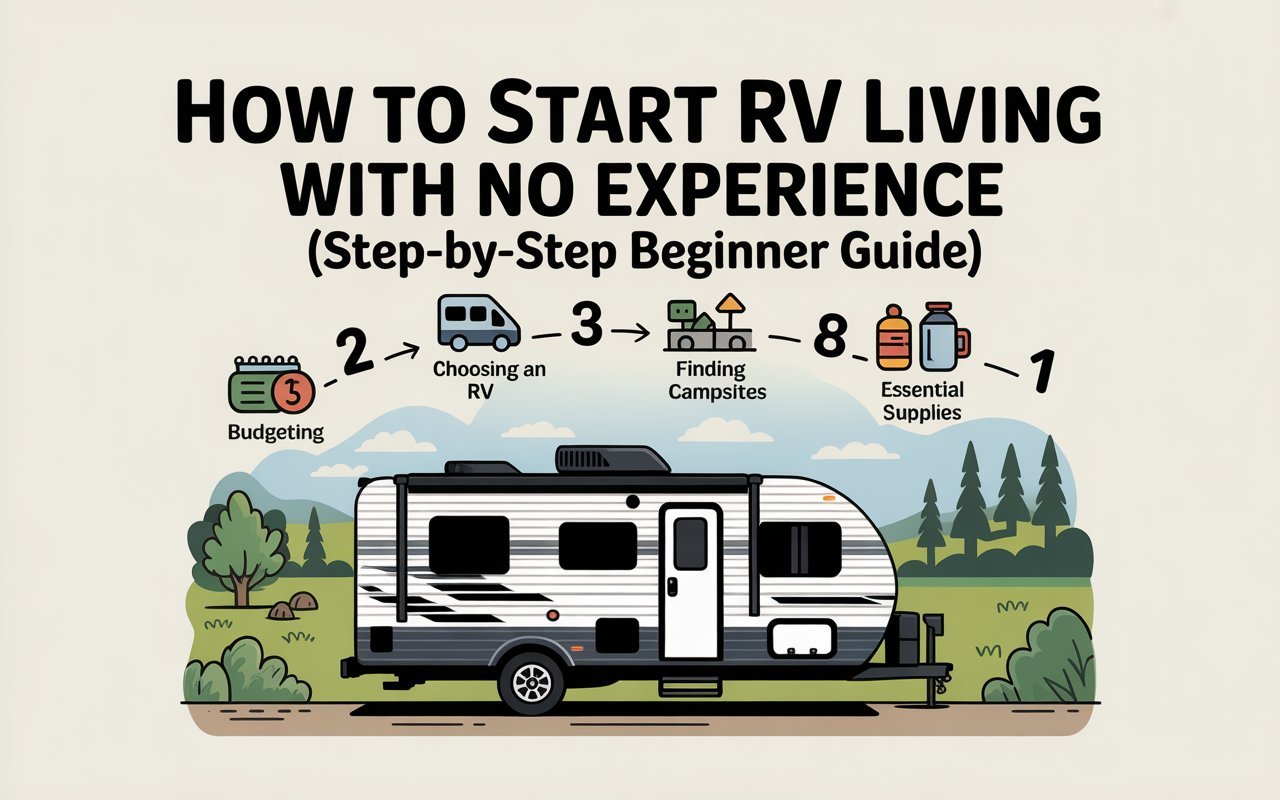
How to Start RV Living With No Experience (Step-by-Step Beginner Guide)
The open road, stunning sunsets in your backyard, and the ultimate freedom to roam—the allure of the RV lifestyle is stronger than ever. For many, it represents a dream of simplicity, adventure, and a profound connection with the world. But if you’ve never owned or even stepped foot in a recreational vehicle, the idea of selling your possessions and hitting the highway can feel overwhelming.
Where do you even begin? This guide is designed for the absolute beginner. We’ll walk you through every critical step, from your first daydream to your first night parked under the stars. Let’s demystify the process and chart your course to a successful start in RV living.
Laying the Groundwork: The Mental & Practical Shift
Before you look at a single vehicle, the most important work happens in your mindset and your planning. Jumping in without this foundation is the fastest route to frustration.
Defining Your “Why” and Your Style
This is your compass. Ask yourself:
- Adventure & Travel: Is the goal to see every national park?
- Financial Freedom: Are you downsizing to reduce mortgage/rent costs?
- Remote Work & Location Independence: Do you need a reliable mobile office?
- Simplicity & Minimalism: Are you seeking to declutter your life?
- Retirement: Is this your dream for the golden years?
Your “why” will directly influence every subsequent decision about the type of RV, your budget, and your travel pace.
Research & Immerse Yourself in the Culture
You don’t have to learn everything the hard way. The RV community is incredibly generous with knowledge.
- Watch YouTube Channels: Seek out creators who document both the glamorous and the gritty parts of full-time life. Channels like “Keep Your Daydream,” “RV Love,” and “Exploring Alternatives” offer invaluable insights.
- Read Blogs and Forums: Websites like RV.net or iRV2 Forums are treasure troves of answered questions.
- Listen to Podcasts: “The RV Podcast,” “The Virtual Campground,” and “RV Miles” are great to listen to on your commute.
- Follow Social Media: Use hashtags like #RVLife, #FulltimeRV, and #VanLife to see daily snapshots.
Craft a Realistic Budget
RV living can be economical, but it is not inherently cheap. Create a detailed budget that includes:
- The RV Itself: Purchase price, loan payments, sales tax.
- Initial Setup & Gear: Hoses, power cords, leveling blocks, kitchenware, bedding, tools.
- Ongoing Costs: Fuel (a major expense), insurance (auto and RV), vehicle registration.
- Living Expenses: Campground fees (which can vary from $30-$100+ per night), RV park memberships, laundry, groceries, cell phone/data plans, healthcare, and entertainment.
- Maintenance & Repair Fund: This is non-negotiable. RVs are houses on wheels; things will break. Aim to save at least 5-10% of the RV’s value annually for repairs.
Step 1: Choose Your Right-Sized Home on Wheels
This is the most exciting and critical step. The key is to match the RV to your needs, not just your wants.
Understand the Two Main Classifications
1. Towable RVs (You Need a Separate Vehicle to Pull Them)
- Travel Trailers: The most common and versatile. Range from lightweight models (~2,000 lbs) to large fifth wheels. They detach, allowing you to use your tow vehicle for errands.
- Example: A family of four might choose a 25-foot bunkhouse travel trailer.
- Fifth Wheels: Large, luxurious, and require a pickup truck with a special hitch in the bed. They offer more space and often feel more like a traditional home.
- Pop-Up Campers & Teardrops: Lightweight and affordable entry points. Offer basic shelter but less security and comfort in extreme weather.
2. Motorized RVs (The Engine and Living Space are One Unit)
- Class A Motorhomes: The bus-like giants. Offer the most space and amenities. Expensive to buy, fuel, and maintain.
- Class C Motorhomes: Built on a van or truck chassis with an over-cab bed. A great middle-ground, often easier to drive than a Class A. Many come in “super C” diesel-powered models.
- Class B Camper Vans: Essentially built-out cargo vans (like a Mercedes Sprinter or Ford Transit). Prized for their driveability, stealth, and fuel efficiency, but space is extremely limited.
The “Try Before You Buy” Rule
Never, ever buy your first RV without experiencing it first.
- Rent Different Types: Use platforms like Outdoorsy or RVshare to rent a Class C for a weekend and a travel trailer the next month. Note what you love and hate.
- Visit RV Dealers & Shows: Walk through dozens of models. Lie down on the beds, pretend to cook in the kitchen, and ask, “Where will our shoes/jackets/laptop/dog food go?”
- Consider Your Daily Reality: Do you work remotely? You’ll need a dedicated desk space. Do you hate laundromats? A washer/dryer combo might be a priority. Love to cook? A functional kitchen is key.
Step 2: Master the Acquisition & Setup
You’ve chosen your rig. Now, let’s get it road-ready.
The Buying Process
- New vs. Used: New offers warranties and modern features. Used offers massive depreciation savings (RVs lose value quickly) but requires diligence. For a first-timer, a gently used RV is often the smartest financial move.
- Get a Professional Inspection: If buying used, hiring a certified RV inspector (find one through NRVIA.org) is the best $300-$500 you will ever spend. They will find issues you would never see.
- Understand Your Tow Vehicle: If going with a towable, you MUST know your vehicle’s payload capacity and towing capacity. The dry weight listed on the RV is meaningless. You must calculate the Gross Vehicle Weight Rating (GVWR) of the trailer and ensure your truck can handle it, plus passengers, gear, and hitch weight. Exceeding limits is dangerous and illegal.
The Essential Gear Checklist
Before your first trip, you’ll need a “starter kit”:
- Water & Sewer: Drinking water hose (not a garden hose!), sewer hose with supportive sleeve, sewer elbow connector, water pressure regulator.
- Power: 30/50 amp power cord (depending on your RV), adapters (50 amp to 30 amp, 30 amp to 15 amp household), surge protector.
- Leveling & Stability: Leveling blocks (like Lynx Levelers), wheel chocks, possibly stabilizing jacks for travel trailers.
- Basic Tools: A good toolkit, duct tape, gloves, tire pressure gauge, and a tire changer for your specific rig.
Step 3: Learn the Systems & Develop Your Skills
Your RV is a self-contained home. You are now the plumber, electrician, and superintendent.
The Big Three Systems
1. Electrical: Understand the difference between:
- Shore Power: Plugging into a campground pedestal (120V AC).
- Batteries: Your 12V DC system for lights, water pump, and fans when unplugged.
- Inverter: Converts battery power (DC) to household-style power (AC) to run outlets.
- Generator: Creates its own AC power (but mind the noise and fuel).
2. Plumbing & Sanitation:
- Fresh Water Tank: Holds clean water for use when disconnected.
- Grey Water Tank: Holds water from sinks and shower.
- Black Water Tank: Holds waste from the toilet. The Golden Rule: Always use plenty of water and specific RV toilet paper. Never let the black tank get more than 2/3 full before dumping, and always dump the black tank before the grey tank (the grey water helps flush the sewer hose).
3. Propane (LP Gas):
- Powers the refrigerator, furnace, water heater, and stove/oven.
- Safety First: Install a propane leak detector. Know how to turn off the gas at the tank.
Practice, Practice, Practice
- Do a Shakedown Cruise: Before your big leap, plan a 1-2 week trip relatively close to home. Use different types of campgrounds (state park, private RV resort, a night at a friend’s driveway). This is where you’ll discover what you forgot, what breaks, and what routines work.
- Practice Driving & Parking: Find an empty parking lot. Practice turning, backing up (use a spotter with clear hand signals!), and judging your corners. Remember: Take wide turns. Swing out before you turn in.
Step 4: Plan Your Life on the Road
The logistics of daily life require a new kind of planning.
Finding Places to Stay
- Campgrounds & RV Parks: From rustic to resort-style. Use apps like Campendium, The Dyrt, or AllStays to find and review sites.
- Public Lands (Boondocking/Dispersed Camping): Camping for free on Bureau of Land Management (BLM) or National Forest land. Requires significant self-sufficiency (solar, large water/grey tanks). Not for absolute day one, but a fantastic goal.
- Membership Clubs: Organizations like Harvest Hosts (overnight stays at wineries/farms) or Thousand Trails (network of campgrounds) can offer value for frequent travelers.
Managing the Practicalities
- Mail & Domicile: You need a legal “home” for taxes, voting, and vehicle registration. Many full-timers use services in states like South Dakota, Texas, or Florida, which are RV-friendly.
- Internet & Connectivity: This is the #1 challenge for remote workers. The solution is often a cellular signal booster (like WeBoost) and a multi-carrier data plan (combining plans from Verizon, AT&T, and/or T-Mobile via mobile hotspots or dedicated routers like those from Pepwave).
Embracing the Journey: Your First Months
Your first year will be a learning curve. You will make mistakes—everyone does. You might forget to retract your awning before driving, or accidentally leave your black tank valve open (a famously smelly beginner error).
The secret is to embrace the problem-solving as part of the adventure. The RV community is famously helpful—don’t be afraid to ask the person in the site next to you for help. That’s how friendships are forged on the road.
Conclusion
Starting RV living with no experience is a journey of preparation, education, and a leap of faith. By methodically working through these steps—defining your vision, thoroughly researching, renting before buying, mastering your home’s systems, and planning your logistics—you transform an intimidating dream into an achievable reality.
The road won’t always be smooth, but the views, the freedom, and the community you’ll find are worth every bump. Your new home, and a continent of adventures, is waiting. All you have to do is take the first step and turn the key.