
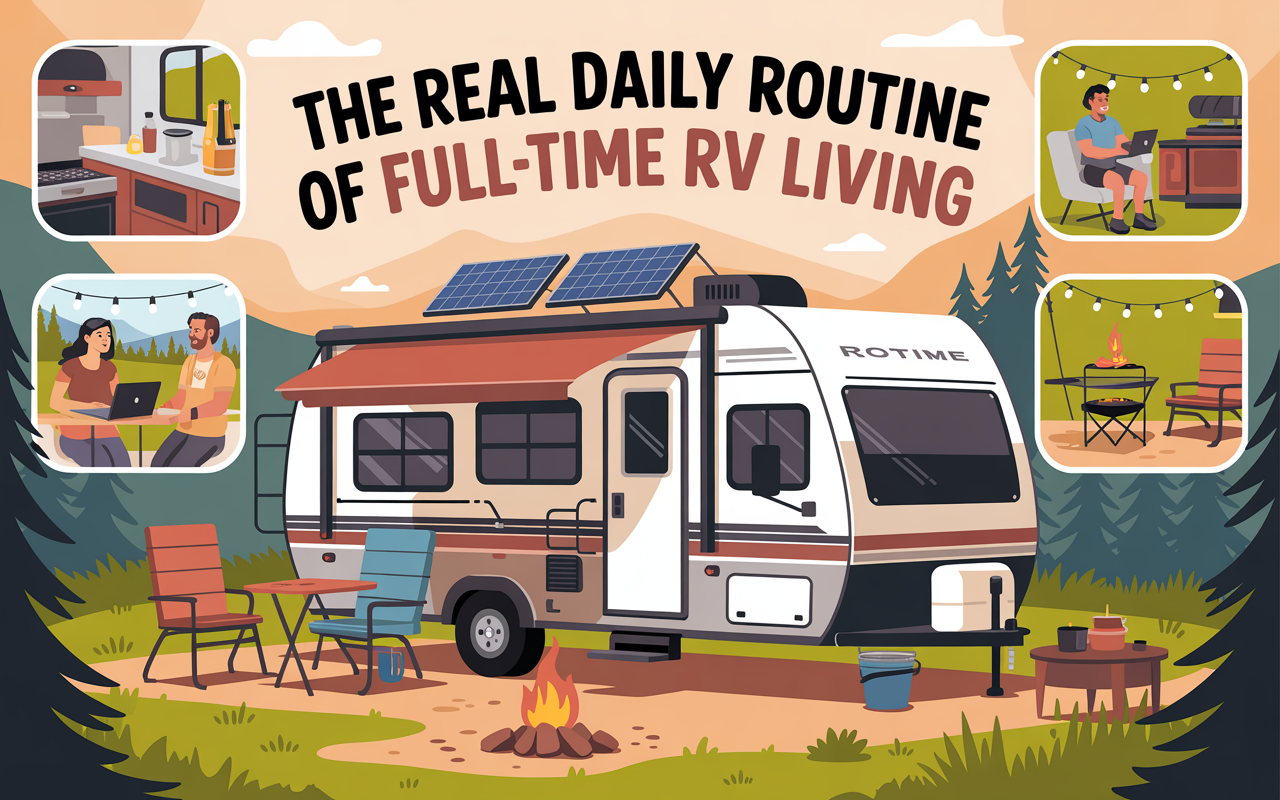
Daily Routine of Full-Time RV Living: What It’s Really Like
Forget the perfectly filtered Instagram posts of eternal sunsets and endless freedom. While full-time RV living offers incredible adventure and flexibility, it is, at its core, a lifestyle with its own unique rhythm, responsibilities, and realities. It’s not a perpetual vacation; it’s a different way of structuring your day-to-day life.
What does a typical day actually look like when your home has wheels? The truth is, there is no single “typical” day. Your routine will shift dramatically depending on whether you’re boondocking in the desert, parked in a bustling RV resort, or actively traveling down the highway. However, woven through all these modes are common threads that define the full-time RV experience. Let’s pull back the curtain and walk through the real daily routine of full-time RV living.
The Myth vs. The Morning Reality
The myth suggests leisurely mornings with coffee while watching wildlife from your zero-gravity chair. Sometimes that’s true. Often, the morning starts with more pragmatic checks.
Waking Up in a Home on Wheels
Your wake-up call might be the sun heating your metal home, the sound of rain on a fiberglass roof, or the distant rumble of a generator. The first order of business is often assessing your “hookups” or lack thereof.
- If You’re Connected: At a full-hookup RV park, your morning might feel more like a traditional home. You can flip on the electric kettle, take a long shower, and use the bathroom without a second thought.
- If You’re Boondocking: Your morning is governed by resource management. You check your battery levels (via an app or monitor), gauge your fresh water and gray/black tank levels, and plan your power usage. That coffee might be made via a French press or a propane stove instead of a power-hungry electric coffee maker.
The Daily Systems Check
Before the day truly begins, many full-timers perform a quick walk-around, much like a pilot checks a plane. This involves:
- Checking tire pressures (a critical safety task).
- Looking for any signs of leaks (roof, undercarriage, windows).
- Ensuring slide-outs, awnings, and steps are functioning properly.
- Observing the weather to decide if you need to batten down the hatches or can put out the outdoor rug and chairs.
Example: Sarah and Tom, working remotely from their fifth wheel, start their day by checking their cellular booster signal and Starlink connection before their 9 AM meetings. Their morning routine is built around ensuring their “office” is operational.
The Workday: Redefining “Commute” and “Office”
A huge segment of full-time RVers are remote workers, freelancers, or entrepreneurs. Integrating work into the nomadic life is a central part of the routine.
Creating a Mobile Workspace
The dining table often transforms into a desk by 8 AM. Laptops, monitors, and notebooks appear. The challenge isn’t just doing the work; it’s creating a productive environment in a small, multi-purpose space.
- Internet is the Lifeline: A significant portion of the “work” routine can involve researching cell signal maps (using tools like Campendium or RV-specific cellular coverage maps), repositioning a hotspot antenna, or driving to a library or coffee shop for a stable connection. This is a non-negotiable daily task for many.
- The Noise Factor: Your “office” view might be a pristine lake, but your conference call could be interrupted by a sudden rainstorm on the roof, a neighbor’s barking dog, or the sound of your own propane furnace kicking on.
The “Commute” and Breaks
The commute is a walk from your bedroom to your dinette. Lunch breaks look different: a 10-minute hike, a quick kayak paddle, or simply sitting outside to truly appreciate your ever-changing backyard. This integration of life and work, being able to enjoy a beautiful location during your workday is one of the lifestyle’s greatest perks.
The Chores: They’re Different, Not Gone
Household chores take on a new meaning and urgency in an RV. You’re not just cleaning a house; you’re maintaining a vehicle and managing finite resources.
The Constant Tidy
In 200-400 square feet, clutter accumulates in minutes. Making the bed, wiping counters, and putting everything in its designated spot isn’t just aesthetic, it’s necessary for sanity and functionality. There’s no “junk drawer” in an RV; every item must earn its keep.
The Iconic RV Chore: Dealing with Water and Waste
This is the reality check few glamorize but every RVer knows intimately.
- Water Management: You become acutely aware of every gallon. Short “Navy showers” (wet down, turn off water, lather up, rinse) become second nature. Washing dishes often involves a meticulous two-basin method to conserve.
- The Dump Run: Emptying your black and gray tanks is a weekly (or more frequent) ritual. At an RV park, this involves pulling on gloves, connecting your sewer hose, and following a careful process. It’s not pleasant, but it’s a quick, straightforward task that becomes just another part of home maintenance, like taking out the trash.
Laundry Day Adventure
Laundry is no longer a load tossed in the basement machine. It’s an event. It means:
- Gathering all laundry into bags.
- Researching the nearest laundromat (or a campground with facilities).
- Blocking off 2-3 hours for washing, drying, and folding.
- Making an outing of it, often combining it with grocery shopping or exploring a new town.
Example: Mike and Jessica, full-timing with two kids, have a strict “one-load-a-day” policy using a portable washing machine that spins clothes mostly dry. They hang-dry items inside or on a rear rack, turning laundry into a daily 20-minute task instead of a day-long ordeal.
Travel Days vs. Home Days
This is the fundamental dichotomy of the RV routine.
Anatomy of a Travel Day
A travel day is not a casual Sunday drive. It’s a coordinated operation.
- Pre-Departure Ritual (1-2 hours): This includes securing all interior items (drawer latches, cabinet locks, fridge bars), retracting slides, stowing the TV, disconnecting utilities (water, sewer, electric, cable), hitching up (or preparing a motorhome), and doing a final exterior walk-through.
- The Drive: Driving a large vehicle is tiring. You’re hyper-aware of height clearances, low-hanging branches, narrow roads, and wind gusts. GPS designed for RVs (like RVLife or Garmin RV) is essential to avoid low bridges or impossible turns.
- Post-Arrival Setup (1 hour): You reverse the process: level the rig, connect utilities, extend slides, unpack the essential items, and maybe put out a chair to finally relax.
The Glory of a “Home Day”
These are the days that make the travel days worthwhile. A home day means you are settled. The routine slows down. You might:
- Deeply explore your location with a long hike or bike ride.
- Tackle larger RV maintenance projects.
- Enjoy a leisurely outdoor meal.
- Socialize with neighbors (RV communities are famously friendly).
- Simply sit and read, fully immersed in your surroundings without the pressure to move or set up.
The Evenings: Community and Solitude
Evening routines also vary wildly.
- In an RV Resort: You might find a vibrant social scene—potlucks, campfires, group walks. The sense of instant community is a highlight for many.
- Boondocking on Public Land: Evenings are about quiet. You watch the stars emerge in breathtaking darkness, listen to the sounds of nature, and rely on your solar-charged batteries to power a light and maybe a movie on your laptop. Generator hours, if you have one, are strictly observed.
- The Universal Constant: Most evenings involve checking the next day’s weather forecast and perhaps planning the next leg of your journey, a task that is both a chore and a delightful dream session.
The Unexpected: The True Constant
Any seasoned full-timer will tell you that the only real routine is dealing with the unexpected. Your day can be upended by:
- A Mechanical Issue: A flat tire on the rig, a failed water pump, a leak.
- A Weather Change: High winds forcing you to retract your awning, a sudden freeze warning requiring you to winterize your lines.
- A Change of Plans: A booked campground falling through, finding an amazing spot and deciding to stay longer, or needing to move for a better work signal.
Flexibility isn’t just a nice trait; it’s the essential skill for this lifestyle.
Conclusion
The daily routine of full-time RV living is a tapestry woven with equal parts mundane chore and profound freedom. It is a life of heightened awareness, of your resources, your surroundings, and your home’s mechanical well-being. You trade the static stability of a sticks-and-bricks home for a dynamic, participatory existence where you are the chief operations officer, maintenance manager, and travel director of your life.
It’s not easier than traditional living. The chores are different, the space is smaller, and the variables are greater. But for those who choose it, the reward is found in the rhythm itself: in the satisfaction of a self-sufficient day on solar power, in the awe of a lunch break with a million-dollar view, and in the quiet evening earned after a successful travel day. It’s a real, structured, and deeply intentional way of life, where every day, even the ordinary ones, is framed by an extraordinary backdrop.