
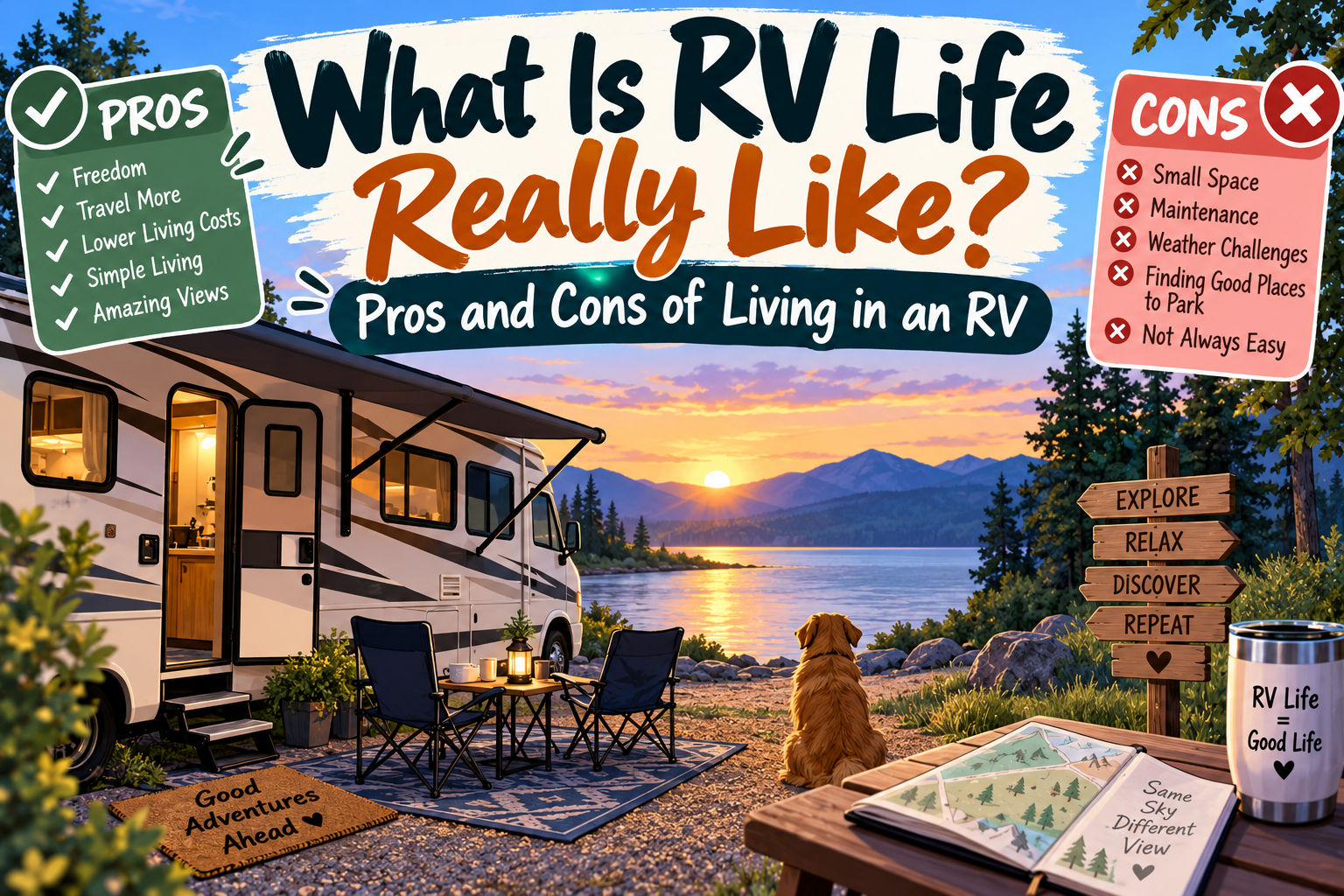
What Is RV Life Really Like? The Pros, Cons, and Reality Behind Living on Wheels
RV living looks dreamy until you remember that a home on wheels still needs repairs, cleaning, groceries, and somebody to figure out why the toilet is making that sound.
From the outside, life in a recreational vehicle can seem like the ultimate escape: wake up beside a lake, move on whenever the mood strikes, and trade a crowded apartment for fresh air and open roads. And yes, there are beautiful moments. But full-time RV living is not one long vacation with better views. It is a lifestyle built around flexibility, planning, compromise, and a surprising amount of maintenance.
So what is it really like to live in an RV? The honest answer is complicated. For some people, it offers freedom and financial relief. For others, the small space, unpredictable expenses, and lack of stability become exhausting fast. Let’s get into the good, the frustrating, and the parts nobody posts on Instagram.
The Biggest Appeal: Freedom
The most obvious benefit of RV life is mobility. Your home can travel with you, which means relocating does not require packing an entire house, breaking a lease, or coordinating a moving truck.
Want to spend spring near the coast and summer in the mountains? That is possible. Need to move closer to family? You can do that too. RV living gives people the ability to change their surroundings without completely rebuilding their lives every time.
That flexibility can be especially appealing for retirees, remote workers, travel nurses, freelancers, and anyone who feels boxed in by traditional housing. Instead of waiting for a two-week vacation, you can make travel part of your regular routine.
Of course, “freedom” comes with a calendar, a fuel budget, and a navigation app that may confidently send you down a road designed for bicycles. But the flexibility is real.
Lower Housing Costs, Sometimes
Living in an RV can cost less than maintaining a traditional home, particularly if you own your rig outright and stay in affordable campgrounds or public land areas.
You may avoid expenses such as:
- A mortgage or high monthly rent
- Property taxes
- Major home renovations
- Large utility bills
- Lawn care and exterior maintenance
- Furniture for multiple rooms
However, the savings are not automatic. RV parks can be expensive, especially in popular destinations. Monthly campground rates may range from relatively affordable to surprisingly close to apartment rent. Add fuel, insurance, campground fees, repairs, internet service, propane, storage, and maintenance, and the budget can get crowded quickly.
An RV may be cheaper than a house, but it is not free housing with a steering wheel.
Small-Space Living Can Be Surprisingly Peaceful
There is something freeing about owning fewer things. In an RV, every item has to earn its place. You quickly discover which belongings matter and which ones were simply taking up emotional and physical space.
A smaller living area can also mean less cleaning. There are fewer floors, fewer rooms, and fewer places for clutter to hide. Your entire home might take less than an hour to tidy, unless you have children, pets, or one person in the household who treats countertops like personal storage units.
Many RV residents enjoy the simplicity. With fewer possessions and less household upkeep, they have more time for outdoor activities, travel, hobbies, or rest.
But minimalism sounds more glamorous than it feels when you are searching for a jacket that was packed beneath the folding table, behind the camping chairs, under the emergency supplies, and beside three things you forgot you owned.
The Views Can Be Incredible
RV life makes it easier to experience places that would be expensive or difficult to visit through conventional travel. You can stay near national parks, beaches, forests, lakes, and small towns that do not have a hotel on every corner.
For nature lovers, that access can be life-changing. Imagine drinking coffee beside a river, watching the sunset from your campsite, or stepping outside to a completely different landscape every few weeks.
The scenery is one of the strongest reasons people stay with RV living despite the challenges. Even an ordinary morning can feel special when your front door opens to a mountain range instead of a parking lot.
Still, not every campsite is a postcard. Sometimes the view is a highway, the neighbor is running a generator at sunrise, and your “peaceful retreat” is one thin wall away from somebody’s enthusiastic karaoke performance.
Maintenance Becomes Part of Daily Life
A traditional home has plenty of repairs, but RV problems are concentrated in a much smaller space—and they often involve systems that are unfamiliar to new owners.
Full-time RV residents may need to manage:
- Plumbing and water tanks
- Propane systems
- Electrical connections
- Batteries and solar equipment
- Roof seals
- Tires and brakes
- Appliances built into tight spaces
- Waste tanks
- Slide-outs and leveling equipment
Some repairs are minor. Others are expensive, inconvenient, and timed with the supernatural precision of a bill arriving right after payday.
Because an RV is both a vehicle and a home, you are responsible for two categories of upkeep. A mechanical issue can prevent you from traveling, while a plumbing or electrical problem can make the interior uncomfortable—or unusable.
Learning basic troubleshooting helps, but not everyone wants their lifestyle to include studying water pumps and inspecting roof caulking. That is perfectly reasonable. It is also something to consider before making the leap.
Travel Days Are Work Days
Moving your home sounds exciting until you realize how much preparation is involved.
Before driving, you may need to:
- Secure cabinets and drawers
- Disconnect water, electricity, and sewer lines
- Bring in outdoor furniture
- Check tires and hitch connections
- Confirm the route can handle your vehicle’s height and length
- Plan fuel stops
- Make sure everything inside is safely stored
Then comes the drive itself. Large RVs require patience, awareness, and confidence. Parking can be stressful. Narrow roads are not cute. Wind can make driving uncomfortable, and bad weather can turn a short trip into a full production.
After arrival, the work continues. You must level the RV, connect utilities, stabilize the vehicle, inspect the campsite, and get everything functioning again.
The reward is reaching a new destination. The catch is that relocation is not as effortless as changing your desktop background.
Internet Access Can Be a Serious Problem
Remote work and RV living seem like a perfect match, but reliable internet is not guaranteed just because your campsite has a beautiful view.
Rural areas may have weak service. Campground Wi-Fi can be overcrowded or unreliable. Mobile hotspots may work well in one location and fail completely in the next. People who work online often need multiple options, such as cellular plans from different providers, signal boosters, campground Wi-Fi, or satellite internet.
This can become expensive. It can also create real stress when a work meeting begins just as the connection decides to disappear into the wilderness.
Anyone planning to work from an RV should research connectivity as carefully as they research campgrounds. A peaceful location is wonderful until your paycheck depends on a signal that keeps blinking out.
Privacy Becomes More Limited
Living in an RV means living close to everyone in your household. There is less room to separate when someone needs quiet, sleep, personal space, or simply five minutes without hearing another person chew.
Couples may find that constant proximity strengthens their relationship—or reveals every irritating habit in high definition. Families face additional challenges because children need space to play, study, and decompress. Pets also require routines, exercise, and safe temperatures.
Privacy outside the RV depends on the campground. Some sites are spacious and secluded. Others place you close enough to hear your neighbors open their cabinets.
Community can be one of the joys of RV living, but people who need solitude should choose locations carefully and be honest about how much togetherness they can handle.
Weather Has More Power
In a house, heavy rain or extreme heat may be uncomfortable. In an RV, weather can affect safety, travel plans, water systems, power usage, and indoor temperature all at once.
Hot weather can make the interior feel unbearable, especially if the air conditioner struggles or campground power is limited. Cold conditions can freeze pipes and tanks. Strong winds may make driving dangerous or create concerns about the RV’s stability. Storms can force residents to seek shelter elsewhere.
Good insulation and climate control help, but RVs are still smaller and more exposed than permanent homes. Seasonal planning matters. You may need to follow favorable weather, winterize the rig, or temporarily relocate.
The romance of “following the seasons” is real. So is checking the forecast like it has personally offended you.
Finding a Place to Stay Takes Planning
You cannot always assume there will be an available campsite when you arrive. Popular parks and destinations often require reservations weeks or months ahead, especially during peak travel seasons.
Long-term travelers need to think about:
- Availability
- Price
- Location
- Road access
- Utility hookups
- Laundry facilities
- Pet rules
- Internet service
- Safety
- Distance from groceries and medical care
Boondocking, or camping without standard utility hookups, can reduce costs and provide more privacy. But it requires preparation, including managing water, electricity, waste, and battery power.
Without careful planning, travelers can wind up driving farther than expected, paying more than planned, or settling for a site that is technically available but deeply uninviting.
Healthcare and Mail Require Strategy
Traditional housing makes mail and medical appointments relatively simple. RV living requires systems.
Many full-time travelers use mail-forwarding services, trusted relatives’ addresses, or commercial mailbox providers. They may also need to establish a legal domicile in a particular state for voting, taxes, vehicle registration, and insurance.
Healthcare requires similar planning. Regular prescriptions, specialist