
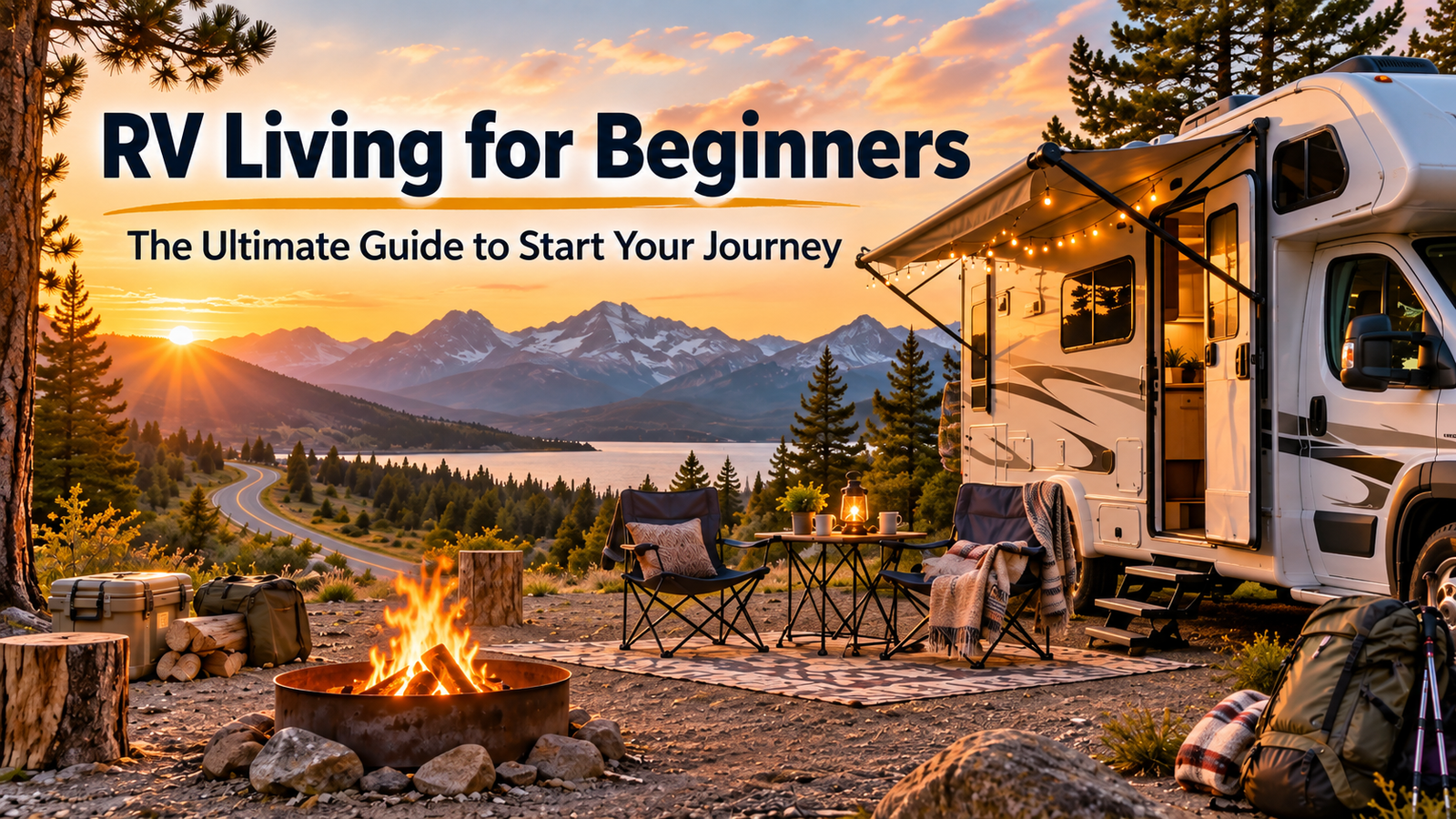
RV Living for Beginners: How to Start the Adventure Without Losing Your Mind
RV living looks dreamy in photos: coffee beside a lake, sunsets glowing through the windshield, and the kind of freedom that makes your group chat jealous. Then somebody has to empty the waste tank.
That is the part the glossy videos tend to skip.
Living in an RV can be rewarding, affordable, adventurous, and deeply inconvenient in ways you did not know were possible. It is also a lifestyle that works best when you understand the practical details before handing over your money for a vehicle with a tiny bathroom and a surprising number of buttons.
So, before you trade your apartment keys for a rig and a dream, let’s talk about what RV life is actually like, how to prepare, and how to avoid learning every lesson the expensive way.
What Is RV Living, Really?
RV living means using a recreational vehicle as your primary home or as a mobile base for extended travel. Some people live in motorhomes. Others choose towable trailers, fifth wheels, camper vans, or compact travel campers.
There is no single “right” version. The best setup depends on:
- Your budget
- How many people or pets are traveling with you
- Whether you work remotely
- How often you plan to move
- Your comfort with driving and maintenance
- How much personal space you require before becoming dramatic
Because let’s be honest: “cozy” can turn into “why is your elbow in my face?” surprisingly quickly.
Decide What Kind of RV Lifestyle You Want
Before shopping, figure out what you actually want to do. Full-time RV living and occasional road trips are very different experiences.
Full-Time RV Living
This means the RV serves as your main residence. You will need to think about:
- Reliable internet
- Mail and package delivery
- Health insurance and medical access
- Vehicle registration
- Residency and tax rules
- Storage
- Laundry
- Weather protection
- Work space
- Long-term campground availability
An RV can be your home, but it is still a small home on wheels. You will need systems for everything, including the items you used to toss casually into a closet.
Seasonal or Part-Time Living
This option offers more flexibility. You might spend several months traveling and return to a regular home afterward. It is often easier for beginners because you can test the lifestyle without immediately selling all your furniture and announcing a permanent reinvention.
Frequent Travel
Some RV owners move every few days. Others park for weeks or months. Moving often sounds exciting until you are packing hoses, leveling blocks, outdoor chairs, kitchen supplies, and several items that somehow appeared overnight.
Slow travel is usually easier, cheaper, and less exhausting.
Choosing the Right RV
The best RV is not necessarily the largest or most luxurious one. It is the one that fits your actual lifestyle and your ability to manage it.
Class A Motorhomes
These are the large coach-style RVs. They offer plenty of space, storage, and residential features. Some are practically apartments with steering wheels.
However, they can be expensive to purchase, fuel, insure, and maintain. Driving one may also require a serious adjustment if your previous road experience involved a compact sedan.
Class B Camper Vans
Camper vans are smaller and easier to drive. They are useful for couples, solo travelers, and people who prioritize mobility over interior space.
The tradeoff is obvious: less room. You may love the efficiency, or you may discover that brushing your teeth while somebody cooks dinner is not the intimate bonding experience you imagined.
Class C Motorhomes
Class C models usually have a recognizable cab-over section and offer a balance between size and maneuverability. They are popular with families and beginners who want more room without stepping into the largest motorhome category.
Travel Trailers
Travel trailers are towed behind a truck or SUV. They come in many sizes and price ranges, making them appealing to new RV owners.
Remember, the trailer is only half the equation. Your tow vehicle must be capable of handling its weight safely. “It technically moves” is not the same as “this is a responsible setup.”
Fifth Wheels
Fifth wheels connect to a special hitch mounted inside the bed of a pickup truck. They often provide generous living space and feel stable when towed.
They do require a properly equipped truck, and their size can limit where you comfortably travel or park.
Pop-Up Campers and Small Trailers
These are compact, affordable, and easier to store. They offer fewer conveniences but can be a smart starting point for people who want to learn the basics before making a larger investment.
New or Used: Which Is Better?
A new RV offers modern features, warranties, and that fresh-out-the-factory feeling. Unfortunately, it may also come with defects that reveal themselves one by one, like a very expensive scavenger hunt.
Used RVs often provide better value and allow someone else to absorb the steepest depreciation. But you must inspect them carefully.
Look for:
- Water stains or soft flooring
- Cracked seals
- Roof damage
- Malfunctioning appliances
- Tire age and condition
- Electrical issues
- Plumbing leaks
- Signs of mold
- Problems with slide-outs
- Unusual odors
Pay for a professional inspection if possible. A qualified inspector can spot issues that look minor to an untrained eye but may become financially disrespectful later.
Build a Realistic Budget
The purchase price is only the beginning. Your RV budget should include:
- Loan payments
- Insurance
- Fuel
- Campground fees
- Maintenance
- Repairs
- Registration
- Propane
- Internet
- Storage
- Laundry
- Food
- Emergency savings
- Roadside assistance
Campground rates vary widely. Public campgrounds can be affordable, while private parks in popular destinations may cost as much as a modest hotel room—or more during peak season.
Also plan for irregular expenses. Tires, roof care, batteries, brakes, and plumbing components do not wait politely until your finances are feeling abundant.
Learn the Basic RV Systems
You do not need to become a certified technician, but you should understand the major systems.
Freshwater
The freshwater tank stores water for use when you are not connected to a campground supply. You will need to monitor the level and sanitize the tank periodically.
Gray Water
Gray water comes from sinks and showers. It may not be as unpleasant as sewage, but it still needs to be handled properly.
Black Water
Black water comes from the toilet. This tank requires careful use, regular maintenance, and absolutely no improvisational behavior.
Use the correct toilet paper, maintain sufficient water in the tank, and follow campground disposal rules. Never treat the waste system like a place where consequences do not exist.
Electrical Power
RVs may use shore power, batteries, generators, or solar equipment. Learn the difference between your 12-volt systems and household-style outlets.
A surge protector is a wise investment. Campground electrical problems can damage expensive equipment faster than you can say, “Why did the refrigerator stop working?”
Propane
Propane may power your stove, furnace, water heater, and refrigerator. Check connections, inspect tanks, and follow safety instructions. Never ignore the smell of gas.
Start With Short Trips
Your first trip should not be a cross-country expedition with a strict schedule and a family reunion waiting at the destination. That is how a learning experience becomes a traveling group project with tears.
Take a short trip close to home. Practice:
- Hitching and unhitching
- Driving and turning
- Backing into a site
- Connecting utilities
- Leveling the RV
- Using the toilet and water systems
- Packing efficiently
- Preparing for departure
You will discover what you forgot, what you overpacked, and which cabinet opens every time you make a left turn.
That information is valuable. Better to learn it two hours from home than twelve states away.
Master the Art of Parking and Setup
Backing up an RV can humble even confident drivers. Use a spotter, communicate clearly, and agree on simple hand signals before you begin.
Do not rely on yelling from opposite ends of the campsite. The neighboring campers have already seen this movie.
When setting up:
- Choose a reasonably level site.
- Position the RV carefully.
- Apply the parking brake or secure the trailer.
- Place leveling blocks as needed.
- Connect electricity.
- Attach the water hose with a pressure regulator.
- Connect sewer equipment according to campground rules.
- Open the appropriate valves only when necessary.
- Check for leaks.
- Secure awnings, steps, and outdoor items.
A calm setup routine prevents frantic mistakes.
Pack Less Than You Think
RVs have limited storage, and weight matters. Bring essentials rather than every object associated with your personality.
Useful basics include:
- First-aid supplies
- Flashlights
- Extra batteries
- Tire pressure gauge
- Basic tools
- Leveling blocks
- Water pressure regulator
- Drinking-water hose
- Sewer hose and fittings
- Wheel chocks
- Fire extinguisher
- Surge protector
- Cleaning supplies
- Weather-appropriate clothing
- Backup food and water
Avoid filling every cabinet before you understand how you use the space. You will find better systems after a few trips.
Plan for Internet and Remote Work
Mobile internet can be inconsistent, especially in rural areas, mountains, forests, and campgrounds packed with people streaming simultaneously.
Remote workers may need:
- A reliable cellular data plan
- A signal booster
- More than one carrier
- A backup work location
- A hotspot
- Offline access to important files
- A realistic understanding of campground Wi-Fi
Do not schedule an important video meeting from a beautiful campground without testing the connection first. Nature is peaceful. Nature is also not obligated to provide broadband.
Understand Campground Etiquette
Good campground manners make everyone’s stay better.
Keep noise under control, respect quiet hours, clean up after pets, avoid walking through other people’s sites, and secure food when wildlife is nearby. Do not leave outdoor furniture scattered across the campsite after you depart.
Also, be mindful of generators. Your neighbor may not share your enthusiasm for listening to one run all night.
Think About Weather
Extreme weather can turn RV living into a serious safety issue.
Heat increases the demand on air-conditioning systems. Cold weather can freeze plumbing and tanks. Strong wind can make driving dangerous, particularly with trailers. Flooding, wildfires, hurricanes, and severe storms require advance planning.
Check forecasts before traveling and know where you can relocate if conditions change. An RV provides mobility, but mobility only helps if you use it before the situation becomes unsafe.
Make Security and Safety a Priority
Install working smoke and carbon monoxide detectors. Keep a fire extinguisher accessible. Learn emergency exits and inspect propane equipment.
It is also wise to carry:
- Roadside assistance
- Spare keys
- A vehicle emergency kit
- Reflective triangles
- Tire repair equipment
- Emergency contacts
- Copies of important documents
Keep valuables out of sight and lock the RV when leaving. A welcoming campsite does not mean every stranger needs access to your home.
Create a Maintenance Routine
Regular maintenance protects your investment and prevents small annoyances from becoming major repairs.
Check:
- Tire pressure
- Fluid levels
- Roof seals
- Exterior lights
- Batteries
- Brakes
- Propane connections
- Water lines
- Slide-out mechanisms
- Awning condition
Inspect the roof regularly, especially after storms. Water damage is one of the most expensive problems an RV owner can face, and it often begins with a seal that looked too insignificant to worry about.
Prepare for the Emotional Side
RV living can be freeing, but it is not a permanent vacation. There will be cramped days, mechanical failures, unexpected expenses, missed family, bad weather, and moments when a normal-sized kitchen starts to feel like a luxury resort.
Give yourself room to adjust. Build routines. Keep in touch with loved ones. Make the RV feel like home with practical comforts rather than clutter.
For couples and families, discuss responsibilities clearly. Who drives? Who handles reservations? Who manages the tanks? Who cooks? Who deals with the mystery noise?
Because “we’ll figure it out” is charming until nobody knows where the water shutoff valve is.
Common Beginner Mistakes to Avoid
New RV owners often:
- Buy too much vehicle
- Ignore towing limits
- Skip the inspection
- Forget to check tire age
- Travel too far between stops
- Arrive after dark
- Overload storage compartments
- Trust campground Wi-Fi without testing it
- Leave the awning out in strong wind
- Fail to level the RV
- Forget maintenance schedules
- Treat the black tank like a regular trash can
- Plan every minute of the trip
Avoiding these mistakes will not make you an expert overnight, but it will save money, stress, and at least one conversation that begins with, “Why is there water on the floor?”
A Simple First-Trip Checklist
Before leaving, confirm that you have:
- A reservation and directions
- Vehicle and RV documents
- A fully charged phone
- Tire pressure checked
- Hitch or tow connections secured
- Propane turned off when appropriate
- Cabinets and drawers latched
- Windows and vents closed
- Steps and awnings retracted
- Leveling equipment packed
- Water and sewer gear stored
- Refrigerator secured
- Departure route reviewed
- Emergency supplies available
Take your time during the final walk-around. Rushing out of the campsite is how awnings remain extended and bikes mysteriously stay behind.
Is RV Living Right for You?
RV living may be a great fit if you enjoy flexibility, travel, simplicity, and solving practical problems. It may be frustrating if you require abundant personal space, dislike maintenance, or expect every day to feel like a vacation brochure.
The lifestyle rewards preparation, patience, and a willingness to laugh when the plan goes sideways—which it will. Probably while you are wearing white pants.
Start small. Rent an RV before buying one. Take several trips in different weather. Track your expenses. Learn the systems. Pay attention to how much space you actually need and how often you truly want to move.
The road can offer freedom, fresh scenery, and a life that feels more intentional. Just remember: the dream is not only the mountain view or the campfire. It is also the checklist, the maintenance, the careful budgeting, and the humble art of figuring out where the leak is coming from.
That is RV living. Beautiful, inconvenient, funny, occasionally chaotic—and absolutely worth it when you prepare for the whole experience, not just the pretty parts.