
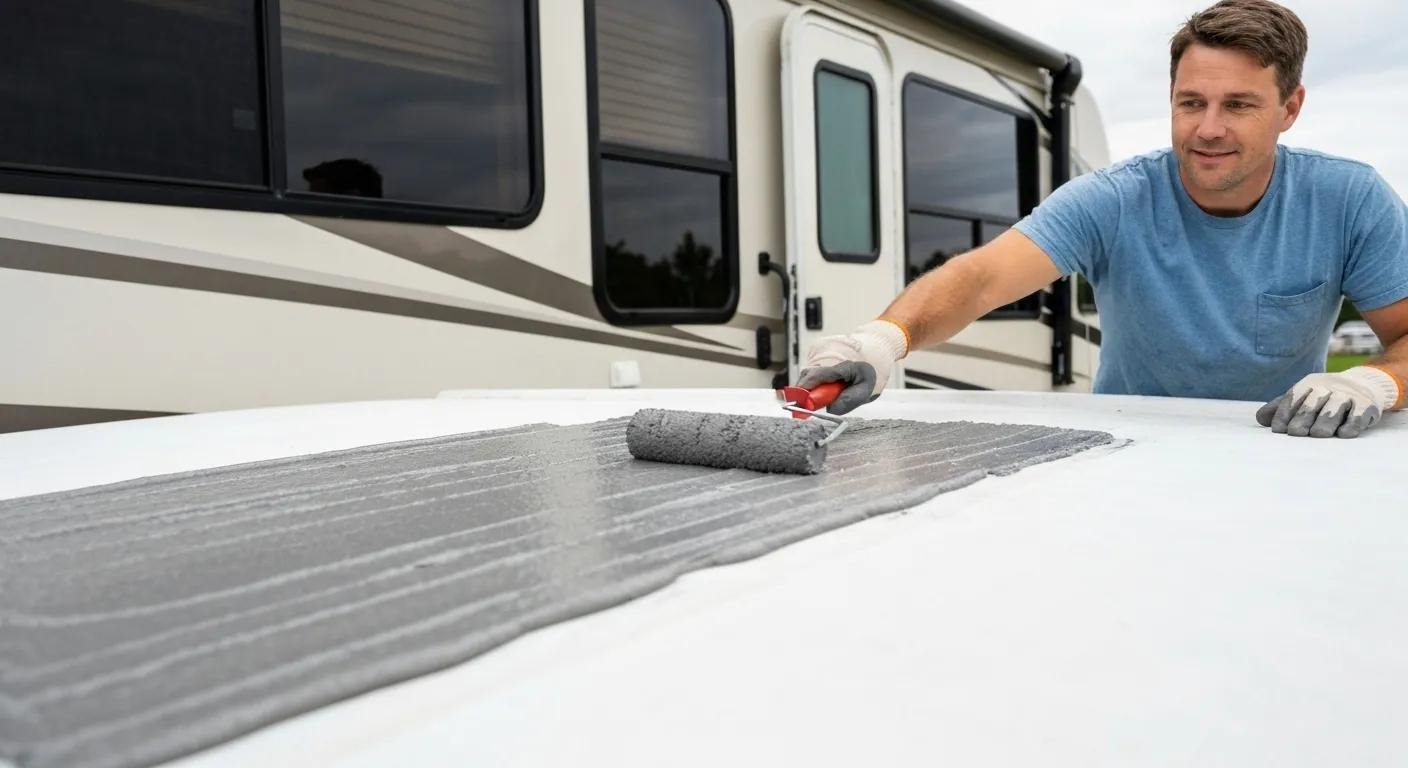
Proper RV maintenance involves periodic cleaning and inspections. Some roof repairs should be left up to experts.
Successful DIY RV roof repair depends on selecting materials compatible with the membrane of your roof and following tried-and-tested application techniques. Prep work, patch placement, and sealant application all contribute to professional-grade results.
Patching Cracks and Tears
An RV roof should provide your vehicle with protection from harsh weather conditions, physical wear and tear, and internal damage. By inspecting regularly and identifying common leak origins as well as selecting patch kits and coatings that can fix minor problems before they escalate into more costly repairs. This guide will walk you through each step of this process—from early sign detection of leakage through applying liquid rubber and silicone coatings that provide lasting protection.
Cracks and tears in RV roof membranes are among the primary sources of leaks, often due to thermal expansion and contraction, punctures from debris or branches, or loose fastener holes. Moisture intrusion causes leakage into the interior, possibly damaging key components.
To address these problems, first ensure the affected area is thoroughly clean and dry before applying a layer of Dicor 501LSW-1 EPDM Self-Leveling Lap Sealant directly over any crack or tear to create a strong waterproof bond. Smooth out and press firmly upon this area so as to form an airtight bond and ensure strong performance over time.
RV roof patch tape can help repair larger tears or holes quickly and effectively. Choose one with a rubber top layer to avoid rust and mildew buildup, and cut a piece large enough to completely cover the damage with room to spare on all sides. Remove its backing before carefully applying it over the hole while smoothing out any creases or bubbles as you go. After applying, cover your patch repair with roof coating as an additional protective measure and protect the surrounding surface.
Resealing Seams
Roof health is a critical element of road readiness for RVs. A crack or broken seam could wreak havoc on its interior panels and wiring, but with regular inspections and prompt repairs, water won’t seep into your parked vehicle!
Builders erect your RV roof carefully, leaving minimal gaps and seams that seal around antennae, screws, vents, and air conditioners. Over time, however, these seals may loosen or deteriorate, leading to leaks causing water damage or structural delamination; by periodically resealing joints with caulk and applying new sealant, you can protect against water ingress while prolonging its lifespan.
Assembling this repair can be straightforward, provided you select an appropriate sealant product. A self-leveling sealant will enable you to create an even surface without low spots or bubbles forming; additionally, it should withstand temperature variations and UV radiation resistance for best results.
Butyl tape may work for sealing vent and skylight curb flanges, but more durable products like EternaBond or Dicor’s RV lap sealant may be better suited to resealing seams and corners in RVs. Both products feature strong adhesive strength to reliably perform at higher temperatures while still remaining easy to remove when upgrading appliances or accessories in your RV.
Reapplying Sealant
RV roof leaks can be an enormous hassle for traveling families, but with a few essential tools anyone can tackle the problem themselves and save money and restore watertight protection for themselves and their mobile home adventurers. Resealing seams regularly as part of regular inspections will prevent water damage and decrease costly repair needs, keeping mobile homes ready for adventure!
Before undertaking any DIY RV roof repair project, the first step should always be a thorough cleaning of the damaged area. Use only cleaners approved for your specific material—avoid petroleum-based and abrasive cleaners, which could compromise its lifespan and damage the membrane.
Check for abrasions, loose fasteners, and any structural issues that require professional intervention. A high-quality sealant or tape like Tedlar or Eternabond works effectively to reseal cracks or tears on any type of RV roof, while for PVC roofing a heat gun or hot-air welder should be used for proper adhesion and a long-term seal.
As RV roofs aren’t typically considered walkable surfaces, most maintenance and repair tasks should be performed from a ladder or gantry. If it is necessary to climb onto the roof directly, be sure it is safe before doing so and wear a harness as an added safety measure. Waterproof hiking boots with secure footing as well as an RV ladder with secure footing should also be considered necessities for completing these projects successfully.
Installing a New Roof
RVing offers freedom and adventure, yet requires regular maintenance to avoid expensive repairs. From minor leaks to extensive membrane replacement projects, using manufacturer-approved materials with precise application techniques will yield professional-grade results for watertight shields over your rig.
Leaks often arise due to natural wear and tear, travel stresses, or improper installation. If caught early enough, leaks can be stopped before water damages interior panels, wiring, and furnishings. Check out our guide on fixing RV roof leaks for instructions on patching cracks or tears in roof membranes, resealing seams, or applying sealant over old sealants again.
Resealing joints and rivets is of particular importance if you own a metal RV. To do this, use a material-specific roof coating such as Dicor’s metal roof coating for RVs; alternatively, to repair punctures or tears due to physical damage, use RV roof patch tape with outstanding adhesion and moisture resistance like EternaBond for emergency as well as permanent repairs.
An effective way to reduce RV roof repairs is through regular visual inspections. Carefully examine your RV’s ceiling and walls for soft spots, mildew, or mold, which could indicate water intrusion and structural issues that require attention.