
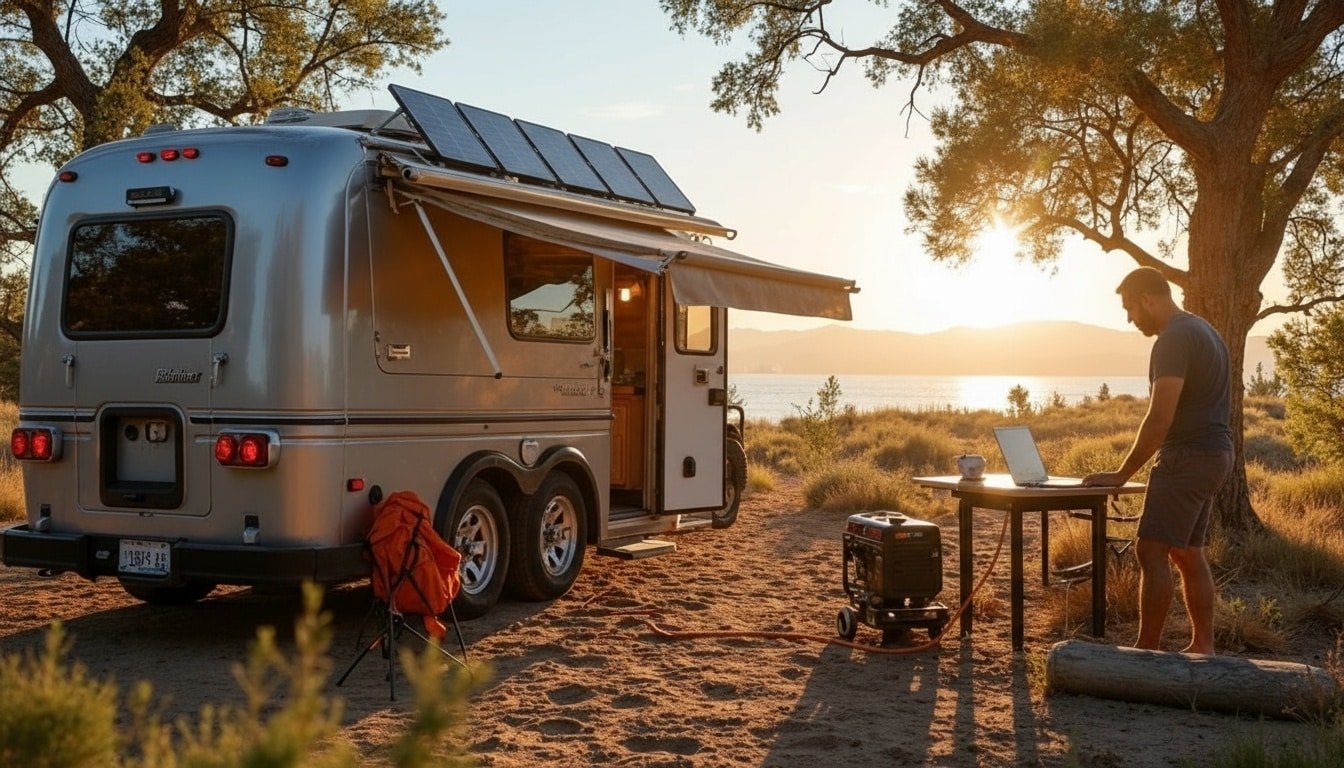
Living in an RV offers an incredible sense of freedom, allowing you to explore new horizons on your own terms. But to truly disconnect and go off-grid, you need a reliable source of power. This is where solar power systems come in, transforming your RV into a self-sufficient home on wheels. By harnessing the power of the sun, you can enjoy the comforts of modern life without being tied to crowded campgrounds or noisy generators.
This guide will walk you through everything you need to know about choosing the best solar power system for your off-grid RV adventures. We’ll cover how to assess your energy needs, explore different types of solar setups, recommend top systems, and provide essential installation and maintenance tips. Investing in solar power not only saves you money and reduces your environmental footprint, but it also gives you the ultimate freedom to roam wherever the road takes you.
Understanding Your RV Power Needs
Before you can choose a solar system, you need to figure out how much power you actually use. This step is crucial for designing a system that meets your daily needs without leaving you in the dark.
Start by making a list of all the appliances and electronic devices you use in your RV. This includes everything from your refrigerator and lights to your laptop and coffee maker. Next to each item, note its power consumption in watts. You can usually find this information on the device’s label or in its user manual.
Once you have the wattage for each appliance, estimate how many hours you use it per day. Multiply the wattage by the hours of use to find the daily watt-hours (Wh) for each device. For example, if you run a 50-watt fan for 6 hours, that’s 300 Wh.
Add up the watt-hours for all your devices to get your total daily power consumption. Here’s a quick look at the typical power usage of common RV appliances:
- LED Lights (per bulb): 5-10 watts
- Refrigerator: 100-200 watts (when running)
- Water Pump: 40-60 watts
- Fan: 30-50 watts
- Laptop Charger: 50-70 watts
- TV: 50-150 watts
Accurately calculating your power needs ensures you invest in a system that’s just right for your lifestyle, preventing you from overspending on unnecessary capacity or underpowering your adventures.
Types of Solar Power Systems for RVs
Once you know your energy requirements, you can start exploring the components that make up an RV solar system. The main parts are the solar panels, a charge controller, an inverter, and batteries.
Solar Panels
Solar panels are the heart of your system, capturing sunlight and converting it into electricity. There are two primary types used for RVs:
- Monocrystalline Panels: These are made from a single crystal structure, which makes them highly efficient. They perform well in low-light conditions and have a longer lifespan. While they are typically more expensive, their efficiency means you need less surface area to generate the same amount of power, which is a big plus for limited RV roof space.
- Polycrystalline Panels: These panels are made from multiple silicon crystals melted together. They are less efficient than monocrystalline panels and don’t perform as well in high temperatures or shade. However, they are more affordable, making them a good option for budget-conscious RVers.
Charge Controllers and Inverters
Beyond the panels, two other components are essential:
- Solar Charge Controller: This device regulates the flow of electricity from your solar panels to your battery bank. It prevents your batteries from overcharging, which can damage them and shorten their lifespan. There are two main types: PWM (Pulse Width Modulation) and MPPT (Maximum Power Point Tracking). MPPT controllers are more efficient and can significantly boost your system’s output, especially on cloudy days, but they come at a higher price.
- Inverter: Your solar panels and batteries produce DC (Direct Current) power, but most household appliances run on AC (Alternating Current) power. An inverter converts DC power from your batteries into usable AC power for your outlets and devices.
Top Solar Power System Recommendations
With a better understanding of the components, let’s look at some popular solar power systems suitable for different needs and budgets.
- For the Weekend Warrior (Budget-Friendly): Renogy 100W 12V Starter Kit
-
- Key Features: This kit is perfect for beginners. It includes a 100W monocrystalline solar panel, an Adventurer 30A PWM charge controller, mounting hardware, and all the necessary cables. It’s a simple, reliable setup for powering lights, fans, and charging small devices.
- Price Range: $150 – $250
- Why we like it: It’s an affordable and easy-to-install entry point into RV solar power. You can also easily expand the system by adding more panels later.
- For the Full-Time RVer (Mid-Range): Go Power! Weekender ISW Solar Kit
-
- Key Features: This comprehensive kit comes with a 190W solar panel, a 30A MPPT charge controller, and a 1500W pure sine wave inverter. It provides enough power to run more demanding appliances like a microwave or TV, making it ideal for full-time living.
- Price Range: $900 – $1,200
- Why we like it: The inclusion of a high-quality MPPT controller and a powerful inverter makes this a versatile and efficient system that can handle the demands of daily off-grid life.
- For the Power User (Premium): Zamp Solar 480-Watt Deluxe Kit
-
- Key Features: This powerhouse system features three 160W monocrystalline panels, a 60A 5-stage PWM charge controller, and pre-wired connections for simple installation. It’s designed for RVers who need to power multiple high-draw appliances simultaneously.
- Price Range: $2,000 – $2,500
- Why we like it: Zamp is known for its durable, American-made panels and exceptional customer support. This deluxe kit offers serious power and reliability for those who don’t want to compromise.
Installation and Maintenance Tips
Installing and maintaining your solar system properly will ensure it performs efficiently for years to come.
Installation
- Plan Your Layout: Before drilling any holes, lay out the panels on your RV roof to find the optimal placement. Avoid areas that are frequently shaded by air conditioning units or antennas.
- Mount the Panels: Securely fasten the mounting brackets to your RV roof. Use a quality sealant around all drill holes to prevent leaks.
- Wire Everything Together: Run the cables from the panels to the charge controller, and then from the charge controller to your battery bank. Connect the inverter to the batteries. If you’re not comfortable with electrical wiring, it’s best to hire a professional.
- Safety First: Always disconnect the batteries before you start working on the wiring. Double-check all connections to ensure they are tight and secure.
Maintenance
- Keep Panels Clean: Dust, dirt, and bird droppings can reduce your panels’ efficiency. Clean them regularly with water and a soft cloth.
- Inspect Wiring: Periodically check all wiring and connections for any signs of corrosion or damage.
- Monitor Performance: Keep an eye on your system’s output to ensure it’s performing as expected. A sudden drop in power could indicate a problem.
Frequently Asked Questions
How much does an RV solar power system cost?
The cost can range from a few hundred dollars for a basic starter kit to several thousand for a high-capacity system. It depends on your power needs and the quality of the components you choose.
Will my solar panels work on cloudy days?
Yes, solar panels can still generate power on cloudy days, but their output will be significantly reduced. A system with a good battery bank will allow you to store excess power on sunny days to use when the weather is overcast.
How many solar panels do I need for my RV?
This depends on your daily power consumption. After calculating your total watt-hours, you can determine the number of panels needed. A common setup for full-time RVers is between 400 and 600 watts of solar.
How long do RV solar panels last?
High-quality solar panels are incredibly durable and can last for 25 years or more. Most manufacturers offer a performance warranty guaranteeing a certain level of output for two decades.
Embrace Solar for Your RV Adventures
Switching to solar power is a game-changer for off-grid RV living. It offers the freedom to travel without constraints, saves you money on fuel and campground fees, and provides a quiet, clean energy source. By assessing your needs and choosing the right components, you can build a reliable system that powers your adventures for years to come. It’s time to harness the sun and unlock a new level of freedom on the open road.